

TRT can continue long term, but there is no single end date that applies to everyone. A TRT treatment follow-up helps assess how therapy is working and whether it remains appropriate as lab results and health goals change. Many men continue treatment long term, with decisions reviewed alongside a healthcare provider.
It’s reasonable to want clarity about the commitment before starting or continuing treatment. Ongoing care involves more than routine appointments: visits and lab tests help track testosterone levels, monitor potential effects, and inform any adjustments.
This article explains what can affect treatment duration, what follow-up visits and testing may involve, and which changes or concerns warrant contacting a healthcare provider. Monitoring needs can vary by treatment method and personal health factors, so understanding the process can help you approach decisions with greater clarity.
Key Takeaways
- TRT can continue long term, but stopping treatment and recovering natural testosterone production are separate processes.
- Follow-up visits and lab tests help track treatment response and identify changes that may call for a review.
- Monitoring depends in part on the treatment method and personal health factors, so care is not identical for everyone.
- Know which symptoms or lack of improvement warrant contacting a healthcare provider rather than waiting for a routine visit.
How long can you stay on testosterone replacement therapy?
Testosterone replacement therapy can continue long term when ongoing evaluation supports its use. There’s no single end date for every patient; symptoms, laboratory results, treatment goals, and health changes inform whether to continue. A TRT treatment follow-up helps keep the decision connected to the reason therapy began. Testosterone therapy isn’t a treatment for normal aging.
Stopping treatment doesn’t mean natural hormone production recovers immediately. Testosterone cypionate and enanthate have an approximate half-life of 8 days and may take 4-6 weeks after the last dose to clear fully. Testosterone levels after injections can begin to decrease within 1-2 weeks, reaching low or sub-normal levels within 4-6 weeks.
Recovery depends on both clearance and the body’s hormonal response. Men treated for less than 2 years may return to their pre-treatment testosterone range within 3-6 months after the formulation clears. After 5 or more years of use, functional blunting of the HPG axis may last 12-24 months. Men over 50 may recover more slowly, making laboratory trends and treatment history useful context.
Formulation changes the timeline. Testosterone gel and cream may clear within days after stopping, while pellets may take 3-6 months after insertion to clear. After testosterone falls below suppressive concentrations, LH and FSH typically begin rising within 4-8 weeks. Serial blood tests for total testosterone, LH, and FSH at 4-8-week intervals can help track recovery. If levels show no recovery after 6 months without pharmacologic support, a comprehensive hormonal evaluation is warranted.
Lifestyle habits can support natural testosterone production but don’t replace evaluation. Aim for 7-9 hours of sleep per night and lift weights 2-3 times per week. These steps support general health while hormone recovery is monitored.
A TRT treatment follow-up can also help assess changes in symptoms and goals after stopping therapy. Discuss the expected recovery timeline and any concerns with your healthcare provider.
Follow-up visits and repeat laboratory testing
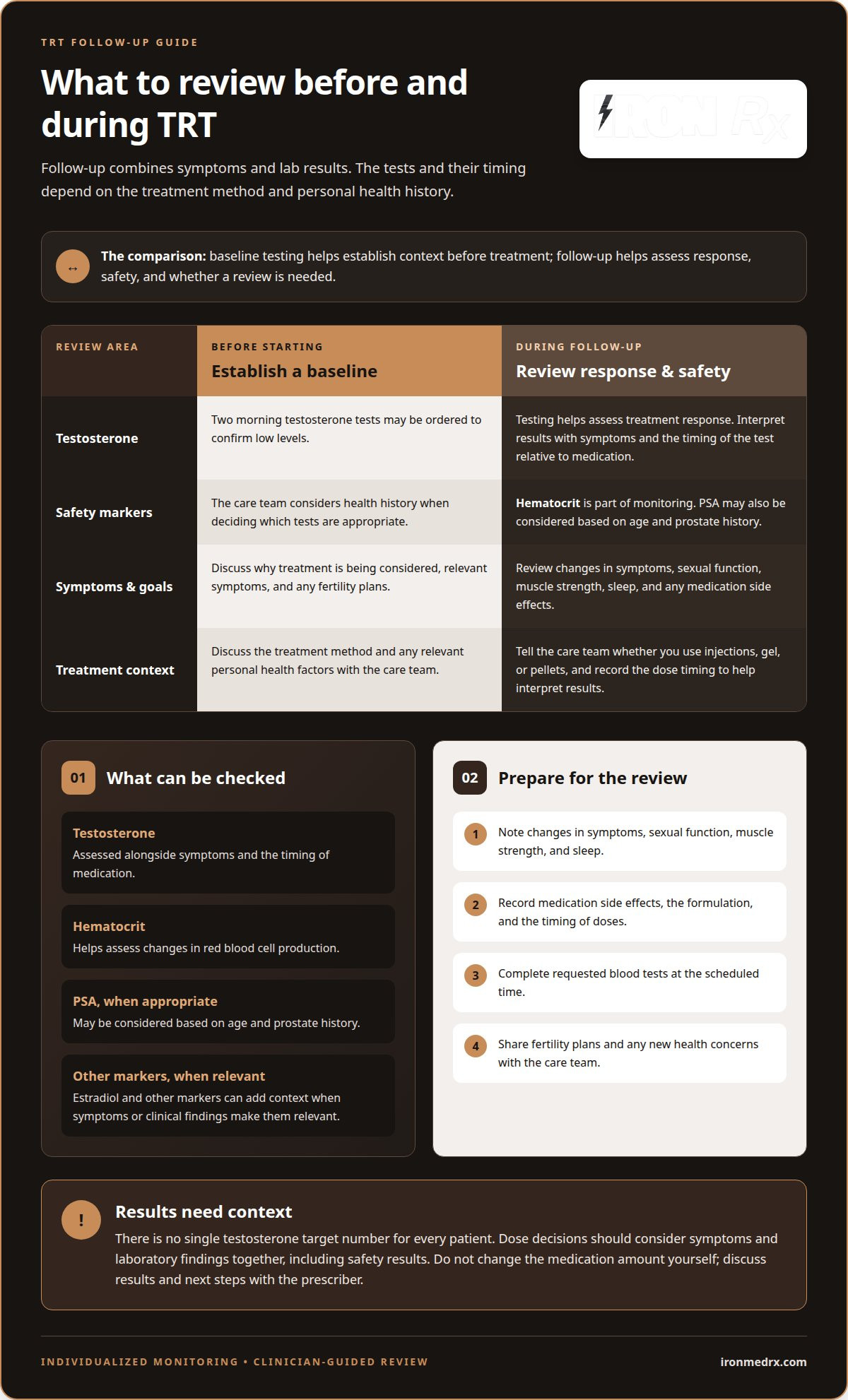
Follow-up combines a review of symptoms with laboratory testing to assess treatment response and safety. The timing and tests depend on the treatment and your health history.
Testing Before and After Starting TRT
Testing establishes a baseline before treatment and tracks changes afterward. Before TRT, providers may order two morning testosterone tests to confirm low levels. After treatment begins, testosterone testing helps assess the response. The American Urological Association’s testosterone deficiency guideline describes follow-up monitoring, including testosterone and hematocrit. PSA testing may also be considered based on age and prostate history.
Testosterone therapy can reduce sperm production and shrink the testicles. If you hope to have children, discuss fertility before treatment begins.
Interpreting Testosterone Levels During Treatment
A safe and effective testosterone level is interpreted alongside symptoms, laboratory results, and the timing of the test relative to medication. There is no single target number that applies to every patient. Results need context, including whether symptoms such as sexual changes have improved and whether monitoring has identified concerns.
Test results can also help distinguish a treatment response from other causes of ongoing symptoms. Tell the care team when you use injections, gel, or pellets, since the formulation affects how results are interpreted.
Adjusting TRT Doses After Follow-Up
Dose adjustments should take account of both symptoms and laboratory findings, not a test result alone. If symptoms persist, the clinician can consider testosterone levels, treatment timing, and potential side effects before deciding whether a change is appropriate.
Hematocrit and other safety results matter as well. For example, an increased red blood cell count may affect treatment decisions. Don’t change your medication amount yourself; discuss results and next steps with the prescriber.
Preparing for a Follow-Up Appointment
Before your visit, note changes in symptoms, sexual function, muscle strength, sleep, and any medication side effects. Record the formulation and timing of each dose, including injections or pellets, to help the care team interpret your lab results.
Complete requested blood tests at the scheduled time, and tell the care team about fertility plans or new health concerns. This information helps put results in context and focus the follow-up review.
Heterogeneity in TRT modalities and monitoring protocols
Monitoring for testosterone replacement therapy varies with the formulation, symptoms, and personal risk factors. For example, an injection schedule affects when clinicians interpret testosterone levels and assess treatment response.
Estradiol and Other Marker Monitoring
Estradiol and other markers can add context when symptoms or clinical findings make them relevant. They complement testosterone results rather than replacing an assessment of hypogonadism or treatment effects.
Monitoring may also include hematocrit and liver function tests, while PSA testing may be appropriate for some men. The American Urological Association’s testosterone deficiency guideline discusses monitoring testosterone, hematocrit, and PSA. The markers selected depend on treatment method and health history. A clinician can interpret results alongside reported changes, such as breast tenderness or fluid retention, rather than treating one lab value as the full picture.
Safety, Side Effects, Hematocrit, and PSA
Safety monitoring checks for treatment effects that may need clinical review. Testosterone therapy can increase red blood cell production, potentially raising blood clot risk; hematocrit testing helps assess this change. Other known risks include acne, fluid retention, breast tenderness, and reduced sperm production.
PSA monitoring may be considered for men over 40 or those with a family history of prostate issues. PSA kinetics describes how PSA changes across tests over time. A trend provides different context than one result, so clinicians interpret it alongside medical history and other findings.
Formulation also shapes monitoring. Testosterone injections are typically administered every 1-2 weeks, while pellets are implanted every three to six months. Some long-acting injections are administered every 10 weeks in a medical office. These schedules affect test timing and the interpretation of hormone levels.
Physical effects matter, too. Testosterone therapy may affect body composition, but it is not a weight-loss drug. Report new symptoms and side effects, including sleep changes, since testosterone therapy can worsen sleep apnea. The care team can review these concerns alongside lab findings and treatment response.
Reasons to contact a healthcare provider
Contact your healthcare provider if symptoms remain unchanged after 3-6 months of testosterone therapy. Persistent low libido, reduced sexual function, or ongoing fatigue may need a fresh assessment. The next step may involve reviewing testosterone levels, treatment timing, and other possible causes rather than simply continuing the same approach.
Report new or worsening side effects, such as acne, fluid retention, or breast tenderness. Testosterone can increase red blood cell production, potentially raising clot risk. Follow-up bloodwork can identify a rising hematocrit. Share new symptoms promptly so the care team can interpret them alongside your results.
Sleep changes also deserve attention. Testosterone therapy can worsen sleep apnea, so report louder snoring, disrupted sleep, or increased daytime sleepiness. These changes can affect daily function and may influence whether your current treatment remains appropriate. Don’t wait for the next scheduled appointment if symptoms are getting worse.
Discuss prostate concerns, a family history of prostate issues, or a new PSA result with your clinician. PSA testing may be part of monitoring for men over 40 or those with a family history. A changing PSA trend needs clinical interpretation; it doesn’t by itself diagnose prostate cancer. Share any prostate symptoms and relevant medical history.
Discuss fertility plans before starting therapy, or if they change during treatment. Testosterone can reduce sperm production and shrink the testicles, which may matter if you’re trying to conceive. A clinician can review potential effects on reproductive function and discuss appropriate next steps.
Contact a healthcare provider before continuing TRT if you’ve had a heart attack or stroke within the past six months. Also report changes in health, medication, or treatment goals; these can alter how ongoing care is assessed. For an evidence-informed review of testosterone therapy and monitoring, explore TRT care with IRON RX.
IRON RX
IRON RX offers clinician-guided care for people considering hormone health treatment. Personalized planning can connect your goals and health history with an appropriate approach, while a clinical evaluation determines whether treatment is suitable.
If you’re deciding whether to begin or continue care, raise questions about symptoms, lab results, fertility goals, and ongoing monitoring. Clear expectations matter: testosterone therapy requires attention to treatment response and potential risks, not just a prescription.
For broader wellness goals, IRON RX also offers Tirzepatide Injections, Copper peptide cream, NAD+ Injection - 1000 mg, and peptides. These are distinct offerings, not substitutes for testosterone monitoring or medical advice about TRT.
Contact IRON RX to discuss a clinician-guided next step for your health goals.
Make your next health decision with clarity
A thoughtful TRT treatment follow-up can help keep care aligned with your priorities as your health and goals evolve. Use your next conversation with a qualified healthcare professional to identify what matters most, whether that’s reviewing your treatment experience, discussing a concern, or considering whether TRT remains appropriate.
IRON RX also offers Tirzepatide Injections, Copper peptide cream, and NAD+ Injection - 1000 mg for distinct health goals. These offerings are not substitutes for TRT monitoring, and treatment decisions should begin with an appropriate clinical evaluation.
If you’re ready to explore clinician-guided care, connect with IRON RX about your health goals. Take the next step at your own pace, with informed questions and a clear focus on your long-term well-being.
Frequently Asked Questions
Can I test testosterone levels at home?
At-home sample collection may be an option, but a result alone cannot establish a diagnosis or guide treatment. Blood tests are used to evaluate testosterone, and diagnosis may require two early-morning results. If you use a home collection service, share the complete lab report and sample collection time with your healthcare provider for interpretation in context.
What follow-up appointments are recommended after starting testosterone replacement therapy (TRT)?
A follow-up and testosterone test may be scheduled about 30 days after starting therapy. Later appointments review symptoms, test results, side effects, and whether the treatment remains appropriate. For example, changes in sexual function or sleep can give useful context alongside laboratory findings. The clinician sets the ongoing visit schedule based on treatment response and health history.
What tests and lab work should be monitored during TRT follow-up?
Monitoring may include testosterone, hematocrit, liver function tests, and PSA for some men. Ask what each ordered test is intended to assess and how the result relates to your treatment. Keep copies of reports over time, since comparing results may reveal a pattern that a single test cannot show.
How often should testosterone levels be checked after starting or changing TRT?
A testosterone level may be checked about 30 days after treatment begins. After a change, testing timing depends on the formulation and dosing schedule, because results need to be interpreted in relation to treatment timing. Follow the schedule set for your care, and note when you last used medication before each blood draw.
What side effects and warning signs should be assessed during TRT follow-up?
Discuss new acne, fluid retention, breast tenderness, reduced sperm production, or sleep changes during follow-up. Testosterone therapy can worsen sleep apnea, so report worsening snoring or daytime sleepiness. Tell the clinician when a symptom began and whether it changes after treatment, helping them assess its relationship to therapy and determine what review is needed.
How does TRT affect hematocrit, blood pressure, cholesterol, and cardiovascular risk?
Testosterone can stimulate excess red blood cell production, potentially increasing blood clot risk; hematocrit testing helps monitor this concern. Blood pressure, cholesterol results, and cardiovascular history provide separate health context for a treatment review. Share existing diagnoses and recent test results with your clinician rather than assuming testosterone levels alone reflect cardiovascular risk.


