

Medical weight loss calls for clinical oversight, not a self-directed shortcut. In the United States, adults with a BMI of 27 or above and at least one weight-related comorbidity meet the stated Zepbound weight-reduction eligibility threshold. Clinician-guided tirzepatide care starts with a review of medical history, current needs, and treatment goals to assess whether the medication is appropriate.
It’s reasonable to want clear answers before considering a prescription medication: who may qualify, what treatment involves, and how follow-up supports informed decisions. Clinician guidance provides a structured way to assess these factors and respond to changes during care, without assuming one plan suits everyone.
This guide explains how medical weight-loss care works, how tirzepatide affects appetite-regulating pathways, and what clinicians consider when assessing eligibility and potential risks. You’ll also learn what ongoing monitoring can involve and how to take a considered next step toward care that fits your health needs.
Key Takeaways
- Understand how a medical evaluation considers your health history, goals, and weight-related factors before treatment is selected.
- Learn how follow-up helps track progress and inform safe, individualized treatment adjustments.
- Review the BMI thresholds and health considerations that may affect eligibility for prescription tirzepatide.
- Explore what treatment involves, including how tirzepatide works and why dosing decisions require clinical oversight.
Is medical weight loss safe when supervised by a provider?
Clinician-guided medical weight loss starts with an assessment, not a prescription alone. A clinician considers eligibility, medical history, and treatment goals before creating an individualized plan.
Medical Evaluation and Individualized Plans
A medical evaluation connects your weight-loss goals with your health profile. The clinician reviews weight-related conditions, current medications, and relevant history, then determines whether tirzepatide or another approach may fit. Individualized planning matters because the same medication may not suit everyone. Look for a process that explains why a treatment is being considered and how the plan relates to your needs.
Clinician Consultation and Medical History
During your consultation, share your medical history, medications, and previous weight-loss efforts, including approaches you’ve found difficult to maintain. These details help the clinician assess potential concerns and identify anything that needs closer review. A careful intake also gives you space to discuss goals and ask how progress will be monitored. Decisions should reflect your health context, not weight alone.
Medication Options, Prices, and Coverage
Tirzepatide acts on GLP-1 and GIP receptors, two pathways involved in appetite regulation. Semaglutide is another GLP-1 medication a clinician may consider; medication choice depends on the patient’s medical profile and treatment goals. Insurance coverage varies by plan and medication. Medication pricing depends on the medication, dosage, and supply; a price is provided after a quote request. Discuss appetite support as part of the broader plan, not as a substitute for clinical assessment.
Finding a Prescribing Clinician
Clinician-guided tirzepatide care can be provided through telehealth, with a clinician reviewing your intake, medical history, and eligibility before determining whether treatment is appropriate. Ask how the process works, including how your plan is explained and how follow-up is handled. Remote consultations can make care accessible while keeping treatment decisions tied to clinical review. Choose a care pathway with clear communication about your plan.
What is a clinician-guided weight loss and metabolic health program?
A structured program connects medication decisions with follow-up, progress tracking, and adjustments. With tirzepatide, a clinician uses these steps to guide treatment over time.
Dose Titration and Adjustments
Dose titration means managing medication dosing as treatment progresses. The clinician considers your reported progress and tolerance to decide whether the plan needs adjustment. There is no single adjustment that suits everyone; decisions should reflect how the current approach is working for you.
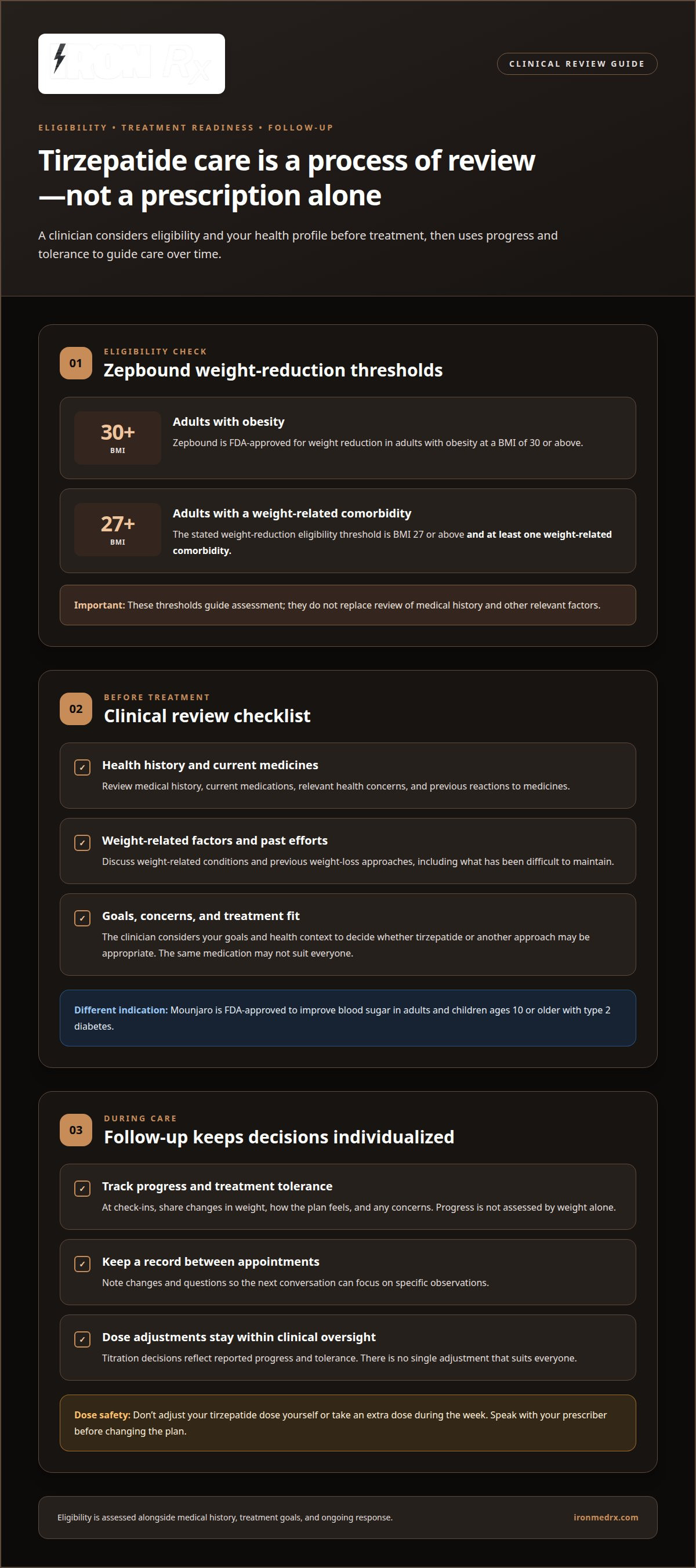
Don’t adjust your tirzepatide dose yourself or take an extra dose during the week. Share questions or concerns with your prescriber before changing the plan. This keeps dosing decisions within the clinical process and gives the clinician a clearer picture of your response to treatment.
Follow-Up and Tolerance Monitoring
Follow-up gives the clinician a consistent way to review changes in your weight and treatment tolerance. At each check-in, describe what has changed since the last review, including whether the current plan feels manageable. These details help determine whether to continue the approach or consider an adjustment.
Progress isn’t assessed by weight alone. A useful review considers weight changes alongside your experience of treatment and any concerns you raise. If your progress changes, the clinician can reassess the plan rather than leaving you to make dosing decisions independently. This ongoing feedback helps keep treatment aligned with your health goals.
Semaglutide is another medication used in weight-management care, but treatment choices and follow-up should be individualized. Clinician-guided care makes room to discuss your options, track your response, and address tolerance through planned check-ins. Keep a record of changes and questions between appointments so your next conversation can focus on specific observations.
Eligibility and contraindications
Eligibility depends on the medication’s approved use and your health profile. A clinician considers both before treatment begins.
FDA-Approved Uses and Eligibility
In the United States, Zepbound is FDA-approved for weight reduction in adults with obesity at a BMI of 30 or above. Adults with a BMI of 27 or above and at least one weight-related comorbidity meet the stated Zepbound weight-reduction eligibility threshold. These thresholds guide assessment, but they don’t replace a review of medical history and other relevant factors. Mounjaro is FDA-approved to improve blood sugar in adults and children ages 10 or older with type 2 diabetes. Brand and indication matter: a clinician considers the intended use, not appetite or weight alone, when evaluating treatment eligibility.
Reviewing Contraindications and Treatment Readiness
Before recommending an injection, the clinician reviews your medical history, current medications, and relevant health concerns. Share these details accurately, including previous reactions to medicines and changes in your health. This evaluation helps identify factors that may affect treatment readiness or need closer consideration. Don’t leave out information because it seems unrelated to weight; the full context supports a more informed decision.
Before starting or stopping tirzepatide, speak with your prescribing clinician rather than changing treatment on your own. Bring an up-to-date medication list, describe your goals, and raise concerns about appetite, side effects, or other health changes. If you’re already taking tirzepatide, explain your current plan and why you’re considering a change. The clinician can use these details to assess next steps and guide you based on your circumstances. Eligibility is a clinical decision informed by approved uses and individual factors, not a BMI figure alone.
Clinician-guided tirzepatide treatment
Obesity is a chronic disease, so treatment requires a plan beyond a single prescription. Tirzepatide targets GLP-1 and GIP receptors, pathways involved in appetite regulation. Clinician-guided tirzepatide care brings that medication into a supervised process: the prescriber considers its role, reviews the treatment response, and uses follow-up to guide decisions. Patients should understand the intended purpose of treatment and how to report changes between check-ins.
The usual starting dose of Zepbound or Mounjaro described in the treatment information is 2.5 milligrams. That starting point isn’t a cue to change dosing independently. A prescriber considers progress and tolerance during follow-up before making dose decisions. Never take an extra dose during the week or adjust the prescribed amount yourself. If a dose or schedule raises questions, raise them with the prescriber before acting.
Oversight also means distinguishing approved uses. The U.S. Food and Drug Administration approved Zepbound to treat moderate-to-severe obstructive sleep apnea in adults with obesity. Mounjaro is approved to improve blood sugar in adults and children ages 10 or older with type 2 diabetes. These indications aren’t interchangeable; the medication and treatment goal should match the clinical context. A comparison study reported 20% weight loss with tirzepatide and 14% with semaglutide after 72 weeks. Individual response and treatment decisions still require clinical review.
Prescription integrity matters. Avoid online sellers offering tirzepatide without a prescription, as they may bypass safety regulations. Clinician-guided care connects prescribing decisions with medical review, monitoring, and communication about treatment changes. Before starting, make sure you understand your prescribed plan and how follow-up works. During treatment, report meaningful changes in appetite, weight, or tolerance rather than changing your dose on your own. This ongoing exchange gives the clinician information to assess your plan within professional oversight.
IRON RX: Tirzepatide Injections
IRON RX offers Tirzepatide Injections as part of clinician-guided medical weight management. Its in-house care team guides personalized plans, connecting treatment decisions with individual health goals and clinical oversight. If you’ve reviewed eligibility and want a supervised approach to treatment, explore care with IRON RX.
Treatment isn’t the right fit for everyone. Before treatment begins, a clinician should consider your medical history, current needs, and whether tirzepatide is appropriate. Clear communication about your goals and relevant health details supports a more informed discussion about care.
If you’re ready to explore the option, contact IRON RX to discuss Tirzepatide Injections.
Take the Next Step Toward Deliberate Care
A useful next step is a focused conversation about what you want to change and what matters to your health. Clinician-guided tirzepatide care is one option to explore with a clear understanding of your goals, medical context, and expectations. The right path supports informed decisions, without pressure to start treatment.
IRON RX offers Tirzepatide Injections, along with Copper peptide cream and NAD+ Injection - 1000 mg. These offerings address different needs, so keep the discussion centered on the care you’re considering and the questions you want answered. Your individual circumstances shape whether a treatment is appropriate.
Take time to identify your priorities, then bring them into a direct conversation with IRON RX. Contact IRON RX to discuss care and explore a considered next step. A thoughtful plan starts with asking the right questions and stays grounded in your health priorities.
Frequently Asked Questions
Can my weight loss plan be adjusted over time?
Yes. A clinician can adjust your plan as your weight, goals, and response to treatment change. For example, if your current approach becomes difficult to tolerate or your progress shifts, share those observations at your next check-in. The clinician can review what’s changed and decide whether the plan still fits. Keep notes between appointments so decisions are based on clear examples.
How is this different from a standard diet or fitness program?
Medical weight management adds clinician assessment and prescription oversight to health-related decisions. A standard diet or fitness program generally focuses on eating patterns and physical activity; it doesn’t assess whether medication is suitable. In a supervised program, a clinician considers your health history, goals, and response to treatment. Nutrition and movement can still matter, but medication decisions remain part of the medical care plan.
How long does it take to start treatment after my consultation?
There isn’t one start time for every patient. Next steps depend on completing a clinical review, determining whether treatment fits your needs, and issuing a prescription if appropriate. For example, the clinician may need to review medication details or clarify your medical history before deciding. Ask what remains in your process and what needs to happen before treatment begins.
How often will I check in with my provider?
Your care plan sets the check-in schedule. Follow-up frequency depends on the treatment stage and what the clinician needs to assess, such as progress, tolerability, or a proposed dose adjustment. Bring specific updates to each conversation, including changes in appetite, weight, or how the plan fits your daily life. If something changes between check-ins, follow the communication instructions provided for your care.
Is Tirzepatide Safe?
Tirzepatide’s safety depends on whether it is appropriate for your health profile and how it is prescribed and monitored. A clinician reviews your relevant medical history, current medications, and treatment goals before making a recommendation. Follow the prescribed instructions, don’t change doses on your own, and report concerns or unexpected changes to your prescriber. This gives the clinician important context for ongoing treatment decisions.
What types of weight loss or metabolic health treatments are offered?
IRON RX offers Tirzepatide Injections and other therapies, including GLP-1 treatments, peptides, TRT, NAD+ Injection - 1000 mg, and Copper peptide cream. These offerings have different purposes, so they shouldn’t be treated as interchangeable weight-loss options. For example, a discussion about weight management should focus on the treatment being considered and how it relates to your health goals and clinical assessment.


