
Clinical oversight shapes both the treatment plan and how care progresses. Clinician-guided weight loss may include a review of your health history, medicines, eating habits, and activity, alongside tailored nutrition, movement, behavior support, and medication when appropriate. According to NIDDK, prescription weight-management medications are generally used alongside healthy eating and physical activity, and medication isn’t appropriate or necessary for everyone.
A diet program can provide structure, while medical care adds clinical input to treatment decisions and ongoing monitoring. That distinction matters when health conditions, current medications, or treatment tolerance may affect your options. This article explains what medical weight management can involve, how it differs from a diet program, and how clinicians assess risks, benefits, and response over time. You’ll also learn what to expect from a supervised plan and how clinical oversight supports individualized decisions.
Key Takeaways
- Look for a medically supervised program that clearly explains who provides care and how treatment choices are made.
- Understand how clinical care can extend beyond meal and exercise plans to include personalized treatment and ongoing support.
- Learn what follow-up can review, from treatment tolerance and symptoms to nutrition, activity, and progress.
- See how continued clinical oversight can help assess safety and guide changes as your needs evolve.
What’s medical weight loss management?
Medical weight management combines a health assessment with a tailored plan to support weight loss. A supervised program may include lifestyle changes, ongoing support, and prescription treatment when appropriate.
Choosing a Medically Supervised Program
Start by understanding who provides care and how treatment decisions are made. In the United States, physicians and other qualified healthcare professionals may provide medically supervised weight management. Ask how the program reviews your goals, health history, and progress, and how it responds when treatment needs adjusting. NIDDK describes options including lifestyle changes, tailored programs, prescription medications, and, in certain situations, metabolic or bariatric surgery. Medication isn’t appropriate or necessary for everyone.
Medical Evaluation and Health Factors
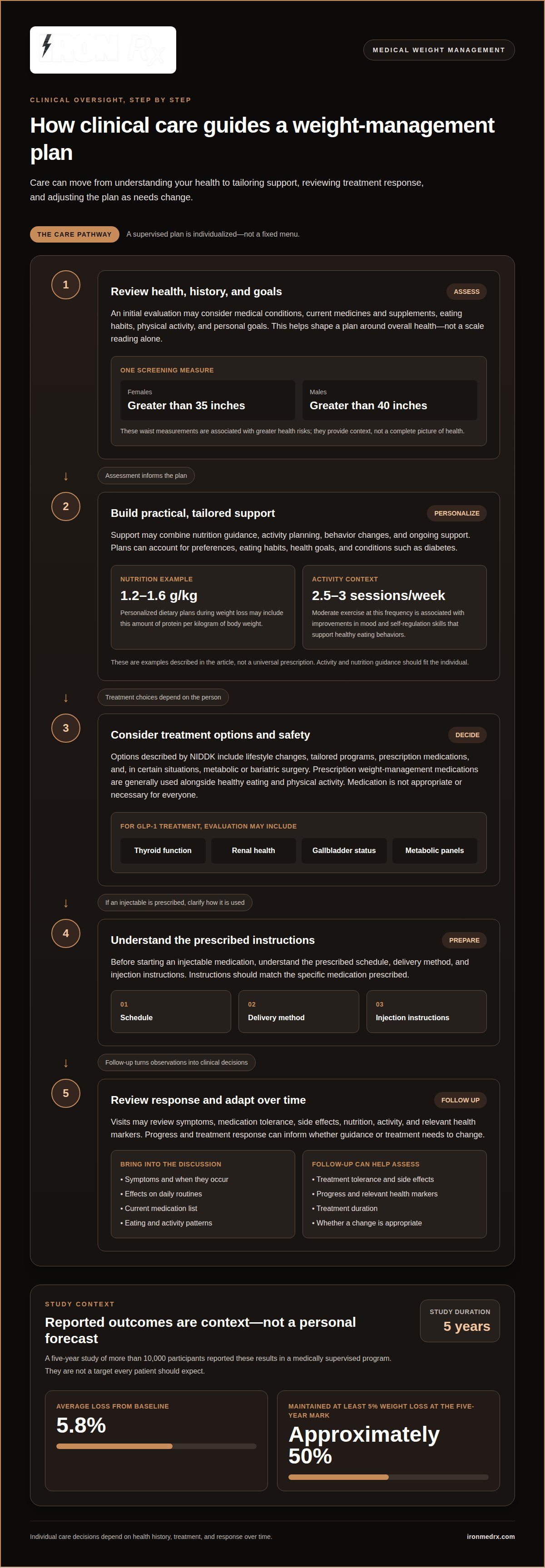
An initial evaluation can consider medical conditions, medications, dietary supplements, eating habits, and physical activity. These factors help shape a plan rather than treating a scale reading in isolation. For GLP-1 treatment, the evaluation may include thyroid function, renal health, gallbladder status, and metabolic panels. Insurance coverage for medical weight management or GLP-1 medications depends on the specific plan and prescribed treatment. Program and medication costs depend on care components, treatment, and follow-up; pricing is case-dependent and provided after a quote request.
Conditions Associated With Excess Weight
Excess weight can occur alongside other health concerns, so evaluation should consider overall health markers and individual medical history. Waist measurement offers one useful screening measure: a measurement greater than 35 inches for females or greater than 40 inches for males is associated with greater health risks. These thresholds provide context, not a complete picture of health. A clinician can consider them alongside other relevant factors when discussing a medical weight plan.
Medication Supervision and Injection Instructions
GLP-1 and dual GIP/GLP-1 medications require individualized consideration; healthy eating and physical activity remain part of treatment. NIDDK advises that prescription weight-management medications are generally used alongside both. Before starting an injectable medication, make sure you understand the prescribed schedule, delivery method, and injection instructions. Review how to discuss symptoms or side effects during follow-up, so treatment response can inform next steps. These instructions should match the specific medication prescribed.
Is Physician-Guided Weight Loss the Same as a Diet Program?
A diet program often focuses on food choices and routines. Medical weight management can add individualized counseling, consideration of your health, and structured support.
Nutrition Counseling and Guidance
Nutritional counseling turns broad advice into practical choices patients can use at meals. A plan may account for preferences, eating habits, health goals, and conditions such as diabetes. For example, a nutrition professional can help someone who is overweight plan balanced meals that fit their schedule. Personalized dietary plans during weight loss may include 1.2-1.6 grams of protein per kilogram of body weight.
Ask how nutrition guidance is tailored and revisited as your habits change. Some programs use amino acids and nutritional supplements, including vitamin D and B-complexes, aiming to boost metabolism and burn fat. Supplements don’t replace an eating plan. Their role depends on the program’s approach and your individual needs.
Lifestyle and Activity Planning
Exercise advice should connect to a person’s current routine and realistic next steps. Moderate exercise of 2.5 to 3 sessions per week is associated with improvements in mood and self-regulation skills that support healthy eating behaviors. A plan can translate that guidance into activities that fit daily life, such as walking or scheduled movement breaks.
NIDDK describes weight-management options including lifestyle changes, tailored programs, prescription medications, and, in certain situations, metabolic or bariatric surgery. A medical plan may include nutrition, physical activity, behavior changes, and ongoing support without prescription medication. Review how the program helps you track routines and adjust them over time. Sustainable change comes from repeatable actions, not a rigid menu or a single exercise target.
Physician-supervised weight management
A physician-supervised weight loss program should connect personal goals with health measures and follow-up. The clinician can monitor progress, discuss treatment response, and adapt guidance as needs change. A five-year study involving more than 10,000 participants reported average weight loss of 5.8% from baseline in a medically supervised program. In that study, approximately 50% maintained at least 5% weight loss at the five-year mark. These results offer context, not a target every patient should expect.
Follow-up helps keep treatment responsive rather than fixed. Visits may review symptoms, medication tolerance, side effects, nutrition, activity, and relevant health markers. If you experience nausea or fatigue during treatment, discussing when symptoms occur and how they affect daily routines can inform the next clinical decision. For prescription medication, follow-up can also consider treatment duration and whether a change is appropriate.
Virtual primary care can support weight-management discussions when care is provided remotely. Prepare a current medication list, questions about symptoms, and a brief record of eating and activity patterns. These details help focus the conversation and give the physician practical context for guidance. Remote care still needs clear follow-up: understand how progress will be reviewed and how treatment decisions will be communicated.
Weight loss may also be considered as part of chronic disease management. Modest loss of five to ten percent of body weight can meaningfully improve several health measures. A physician can use relevant markers and your medical history to assess how progress relates to broader health goals. The plan should reflect those priorities, rather than treating weight change as the only measure of success.
Plan for maintenance from the beginning. Sustainable nutrition and behavior habits can support weight maintenance when medication is tapered or moved to a maintenance dose. A weight-management plan can address both active treatment and the routines that follow, helping you work toward your goals while keeping long-term health in view.
Clinical oversight and treatment safety
Safety depends on matching treatment to your health history and reviewing your response over time. Laboratory testing isn’t automatically necessary for every patient in a medical weight-loss program. A doctor’s evaluation can consider symptoms, medications, and relevant health markers to determine what information supports a personalized plan. A physical exam can be one part of assessing whether a care plan should address hormone-related concerns.
Monitoring should connect specific measures to clinical decisions. Waist circumference should be checked at least once a year, while fasting insulin and glucose dynamics can help assess changes in insulin resistance. At follow-up, discuss symptoms, medication tolerance, and side effects, including when they began and how they affect daily routines. These details help the care team evaluate whether to continue, adjust, reconsider, or stop treatment.
Clear accountability matters. A program should explain who provides care and how decisions are made, from initial evaluation through follow-up. The term “Medical Weight Loss Center” isn’t federally regulated in the United States, so the label alone doesn’t explain a provider’s qualifications or clinical process. Look for a clear description of the clinician’s role and how a primary care relationship fits into treatment.
Safety isn’t a one-time appointment or a checklist completed before treatment. It involves weighing potential benefits against risks and reviewing your response as care progresses. For example, a change in symptoms or health markers may prompt a doctor to reassess the plan rather than treating the original approach as fixed. Clinical supervision supports informed decisions, but it doesn’t make every weight-loss plan risk-free.
For a personalized discussion of clinician-guided care, explore your care options.
IRON RX: Tirzepatide Injections
IRON RX offers Tirzepatide Injections as an option for adults exploring medically guided weight management. Its personalized plans are guided by an in-house care team with 199+ years of combined clinical experience. If medication is part of your weight-loss goals, consider how it fits alongside nutrition, activity, health history, and ongoing treatment decisions. Tirzepatide may not be suitable for everyone, so a treatment plan should reflect individual health factors.
Use this information to clarify what you want from care, including how treatment is explained and monitored. Contact IRON RX to discuss clinician-guided weight management and whether Tirzepatide Injections fit your goals.
Make Your Next Step Deliberate
Start with a clear idea of what you want care to accomplish. Consider which questions matter most: treatment options, how decisions are guided, or how progress will be reviewed. Clinician-guided weight loss works best as a collaborative process, with your priorities and health context shaping the conversation. Medication may be one part of care when it suits your needs.
IRON RX offers Tirzepatide Injections, Copper peptide cream, and NAD+ Injection - 1000 mg. If you’re ready to discuss weight-management care and your goals, contact IRON RX to discuss care.
Take your next step with intention, keeping your long-term well-being at the center of the plan.
Frequently Asked Questions
Am I a candidate for semaglutide or tirzepatide weight loss treatment?
Possibly. A clinician assesses your health history, current medicines, weight-related health concerns, and treatment goals before considering semaglutide or tirzepatide. Suitability isn’t determined by a single scale reading. Ask how the proposed medicine would fit your overall care, what symptoms to report, and how your progress or treatment tolerance would shape follow-up decisions.
Can weight loss improve my diabetes or blood pressure?
Weight loss may support management of diabetes or blood pressure, but it doesn’t replace prescribed treatment. A clinician can interpret changes using measures such as glucose readings and blood pressure logs, alongside your medical history. Keep taking medicines as prescribed, and discuss planned medication changes with the clinician managing that condition before making adjustments yourself.
How can a doctor help me lose weight?
A doctor can turn a broad goal into a practical care plan by identifying barriers and choosing appropriate support. For example, if travel disrupts meals or activity, a physician can help adapt your routines rather than treating one missed week as failure. They can also review your response and discuss whether another approach is warranted as circumstances change.
What Do I Need to Know About the New Weight Loss Drugs?
Prescription weight-loss medicines are one treatment option, not a replacement for ongoing health habits. NIDDK advises that these medications are generally used alongside healthy eating and physical activity. Before starting, understand how to take the prescribed medicine, what symptoms to report, and how follow-up will review your response. Don’t change the treatment schedule without discussing it with your clinician.
What testing is needed to determine a person’s need for weight management?
There isn’t one test panel that everyone needs before discussing weight management. Evaluation can begin with your health history, current medicines, and a physical examination; further tests depend on the clinical question and potential treatment. Bring a medication list and any recent test results to the appointment. That context can help focus decisions on relevant information.
What is clinician-guided weight loss?
Clinician-guided weight loss is a personalized approach in which a healthcare professional helps shape and review a weight-management plan. The plan can address nutrition, activity, health conditions, and whether prescription treatment is appropriate. Compared with a diet plan alone, clinical care connects weight-related goals to your medical context and treatment decisions, then uses follow-up to guide next steps.
