

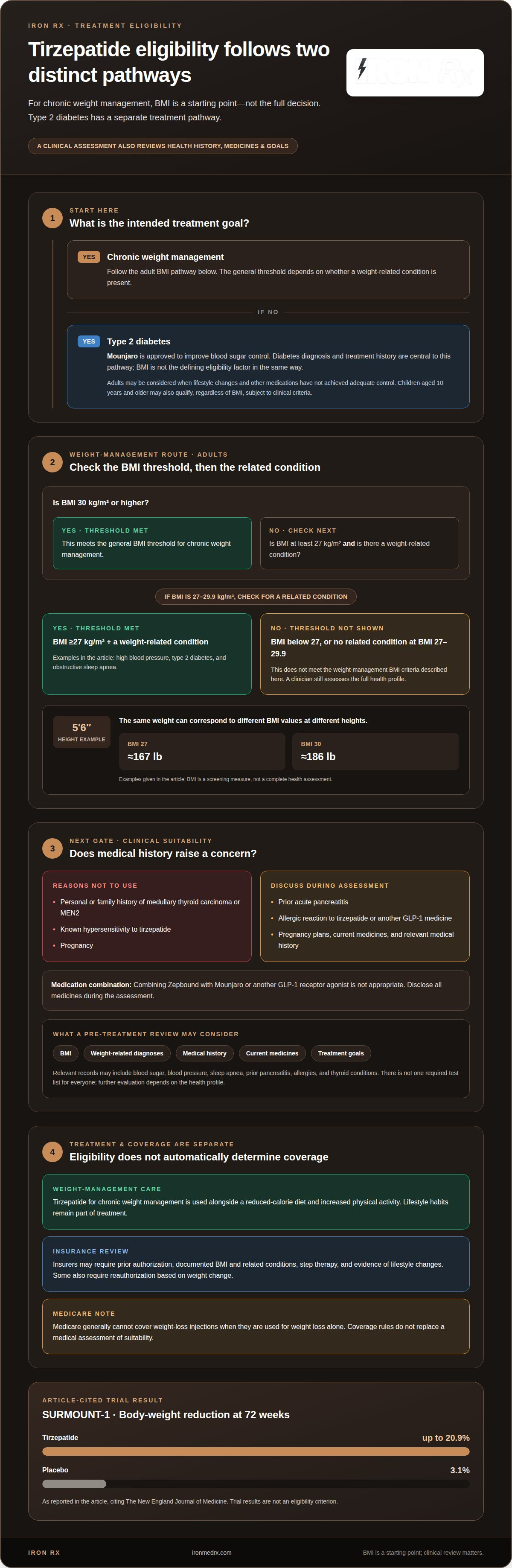
Eligibility has clear starting points, but a BMI number alone doesn’t settle the decision. For chronic weight management, adults generally meet the BMI threshold at 30 kg/m² or higher, or at 27 kg/m² or higher with a weight-related condition; these are key parts of tirzepatide treatment eligibility. Tirzepatide may also be prescribed for type 2 diabetes through a separate treatment pathway.
It’s reasonable to wonder whether lifestyle changes must come first, or whether they still matter once medication enters the picture. Tirzepatide for chronic weight management is used alongside a reduced-calorie diet and increased physical activity, so day-to-day habits remain part of treatment. This guide explains how BMI, weight-related conditions, diabetes, medical history, and lifestyle factor into tirzepatide treatment eligibility, and why clinical oversight matters.
Key Takeaways
- Compare your BMI and any weight-related health conditions with the thresholds used for chronic weight-management treatment.
- Recognize that type 2 diabetes follows a separate treatment pathway, where BMI isn’t the defining eligibility factor.
- Understand why medical history, including certain thyroid conditions, can affect whether tirzepatide is appropriate.
- See how nutrition and physical activity remain part of weight-management care alongside medication.
Who Qualifies for Tirzepatide Medical Weight Loss Treatment?
For chronic weight management, adults generally meet the BMI threshold at 30 kg/m², or 27 kg/m² with a weight-related condition. Medical history and treatment goals also help determine whether tirzepatide is appropriate.
Health Conditions Supporting Eligibility
Weight-related conditions are health concerns associated with excess weight that can support eligibility when BMI is at least 27 kg/m². Examples include high blood pressure, type 2 diabetes, and obstructive sleep apnea; these conditions help show why weight management may matter beyond the number on a scale.
Type 2 diabetes also has a separate pathway: Mounjaro is approved to improve blood sugar control, and eligibility doesn’t depend on BMI in the same way. Tirzepatide produced up to 20.9% body-weight reduction at 72 weeks, compared with 3.1% for placebo, in the SURMOUNT-1 trial, according to The New England Journal of Medicine. Semaglutide and tirzepatide have distinct prescribing criteria; both require review of medical history, and a personal or family history of medullary thyroid carcinoma or MEN2 is a concern for both.
Conditions That May Make Treatment Unsuitable
Some medical histories can make tirzepatide unsuitable or call for added caution. A personal or family history of medullary thyroid carcinoma or multiple endocrine neoplasia syndrome type 2, known hypersensitivity to tirzepatide, and pregnancy are reasons not to use it.
Prior acute pancreatitis or an allergic reaction to tirzepatide or another GLP-1 medicine also warrants discussion. Combining Zepbound with Mounjaro or another GLP-1 receptor agonist isn’t appropriate; disclose these conditions and medicines during the assessment.
Pre-Treatment Medical Evaluation
A pre-treatment evaluation reviews BMI, weight-related diagnoses, medical history, and current medicines to assess suitability. Bring relevant records about blood sugar, blood pressure, sleep apnea, prior pancreatitis, allergies, and thyroid conditions, since each may affect the treatment decision.
There isn’t one required test list for everyone. An assessment may use existing measurements and records, then determine whether further evaluation fits your health profile. Discuss pregnancy plans too, because they affect whether treatment is appropriate.
Insurance and Medicare Eligibility Rules
Medical eligibility and insurance coverage are separate decisions. Insurers may require prior authorization, documented BMI and related conditions, step therapy, and evidence of lifestyle changes. Some also require reauthorization based on weight change.
Medicare generally cannot cover weight-loss injections when they’re used for weight loss alone. For a coverage review, identify the intended use, diagnosis, BMI documentation, and insurer requirements. Coverage rules don’t replace a medical assessment of whether treatment is suitable.
FDA BMI thresholds for weight-management treatment
For adults, weight-management treatment generally uses BMI thresholds of 30 kg/m², or 27 kg/m² with a weight-related condition. These cutoffs are a starting point for assessing whether treatment may be appropriate.
BMI-Based Treatment Eligibility
BMI-based eligibility uses weight in relation to height as an initial screening measure. These thresholds are central to tirzepatide treatment eligibility because the applicable BMI cutoff depends on whether a related health condition is present.
For adults, a BMI of 30 kg/m² or higher meets the general threshold for chronic weight management. A BMI of at least 27 kg/m² may meet the threshold when a weight-related condition is present. Examples include high blood pressure, type 2 diabetes, and obstructive sleep apnea.
At 5 feet 6 inches, approximately 167 lb corresponds to BMI 27, while about 186 lb corresponds to BMI 30. These examples show why height matters: the same weight can produce a different BMI for someone of another height.
BMI is a screening measure, not a complete health assessment. A doctor also considers diagnoses, medicines, and medical history. Thyroid conditions may affect treatment suitability even if you meet a BMI cutoff.
BMI Thresholds for Chronic Weight Management
Chronic weight management has different BMI entry points depending on whether a weight-related condition is present. Understanding the distinction helps clarify which criterion may apply to you.
Zepbound is FDA-approved for adults with obesity, or overweight alongside a weight-related health condition, to reduce body weight and maintain weight loss. The general BMI thresholds are 30 kg/m² without a related condition, or 27 kg/m² with one.
Meeting a threshold may point to a potential treatment pathway, but BMI alone doesn’t establish suitability. A doctor considers medical history, diagnoses, and treatment goals when assessing tirzepatide treatment eligibility.
For a useful discussion, bring your recent weight and any diagnosed conditions. Lifestyle remains relevant to weight management, while BMI helps frame whether Zepbound may be considered.
Prescription access for type 2 diabetes or obesity
In the United States, the intended use guides which tirzepatide brand and prescription pathway applies. Diabetes treatment and chronic weight management have distinct approval criteria.
Access for Type 2 Diabetes
For type 2 diabetes, Mounjaro is prescribed to improve blood sugar control, making diabetes diagnosis and treatment history central to access. Adults may be considered when lifestyle changes and other medications haven’t achieved adequate control.
Children aged 10 years and older may also qualify for Mounjaro regardless of BMI, subject to clinical criteria. A prescription evaluation considers diabetes management, current medications, and medical history. Discuss pregnancy plans, since tirzepatide isn’t used during pregnancy or breastfeeding.
Access for Obesity
For obesity, access generally follows Zepbound’s chronic weight-management indication rather than the diabetes pathway. Adults with obesity, or with overweight and a weight-related condition, may meet the broad eligibility criteria.
Tirzepatide is available by prescription from a licensed healthcare provider. The assessment considers the intended use, BMI, related health conditions, and whether the treatment is medically suitable. If you’re already taking Mounjaro or another GLP-1 receptor agonist, disclose it; Zepbound shouldn’t be used with either.
Approved Brands and Uses
Mounjaro and Zepbound contain tirzepatide, but their approved uses differ. Mounjaro is FDA-approved to improve blood sugar control in adults with type 2 diabetes; children aged 10 years and older may also qualify under clinical criteria.
Zepbound is FDA-approved for chronic weight management in adults with obesity or overweight and a weight-related health condition. It’s also approved for moderate-to-severe obstructive sleep apnea in adults with obesity. These distinctions help match a prescription to the treatment goal rather than treating brand names as interchangeable.
Before a prescription is considered, share your medication list and relevant health history. A history of serious allergic reaction, certain thyroid conditions, or plans for pregnancy may affect suitability. Discussing these factors helps clarify which indication and brand align with your needs.
Lifestyle changes alongside treatment
Tirzepatide is part of a broader weight-management plan, not a replacement for daily habits. For adults using Zepbound, the approved approach includes a reduced-calorie diet and increased physical activity.
Make those expectations practical: plan balanced meals, choose movement you can sustain, and build activity into your routine, such as regular walks. These steps provide a consistent context for treatment and keep weight management focused on lasting habits, not medication alone.
Lifestyle changes can matter even without medication. Losing 5% to 10% of body weight through diet and exercise has been associated with reduced cardiovascular disease risk in adults with overweight or obesity. That association offers a useful health measure alongside weight, though individual goals should reflect the person’s broader medical needs.
For type 2 diabetes, tirzepatide may be prescribed to improve blood sugar control, usually before a doctor recommends insulin. If insulin is part of your current care, discuss your full medication plan rather than adjusting it independently. Share changes in meals, exercise, or blood sugar readings so treatment decisions reflect daily routines.
Treatment also requires attention to tolerance. Tirzepatide dosing generally starts low and increases according to tolerance and clinical response. If side effects interfere with eating, hydration, or activity, tell the prescribing clinician, since this can inform dose decisions. Pregnancy plans matter too: tirzepatide isn’t used during pregnancy, so discuss plans before treatment. It also isn’t used while breastfeeding.
Consistency is the takeaway: align nutrition, exercise, and medication decisions instead of treating them as separate tasks. For a clinician-guided discussion of tirzepatide treatment options, explore the care approach available here.
IRON RX: Tirzepatide Injections
IRON RX offers Tirzepatide Injections as an option to discuss after reviewing your weight-management goals and medical history. If BMI thresholds, weight-related conditions, or other eligibility factors have raised questions, a clinician-guided discussion can connect those considerations with a personalized care plan.
Bring your current medications, relevant diagnoses, and questions about lifestyle changes or treatment suitability to the discussion. This context helps the care team consider how tirzepatide fits your health priorities and whether it suits your needs. Medication is one part of care, alongside informed decisions about nutrition, activity, and ongoing medical guidance.
For a considered next step, contact IRON RX or visit ironmedrx.com.
Make Your Next Health Decision Deliberately
Eligibility is a starting point, not the whole conversation. Frame the decision around what you want treatment to address, how it fits your health history, and what support could help you maintain sustainable routines. Discussing these priorities can make tirzepatide treatment eligibility more personally relevant than a threshold alone.
IRON RX offers Tirzepatide Injections, alongside Copper peptide cream and NAD+ Injection - 1000 mg. For this article’s focus, Tirzepatide Injections are the most relevant offering to discuss in relation to your weight-management goals and medical context. A thoughtful conversation can help you explore how that option aligns with your priorities.
Contact IRON RX to discuss your next step, and move forward with clarity and confidence.
Frequently Asked Questions
Are there any age or other basic criteria?
Yes. For chronic weight management, Zepbound is approved for adults and not for people under 18. Mounjaro’s type 2 diabetes indication includes adults and children aged 10 years and older, subject to clinical criteria. The starting criteria also depend on treatment purpose: weight-management eligibility considers BMI and related health conditions, while diabetes treatment is based on the diabetes indication.
Can I get a GLP-1 if my BMI is under 27?
For chronic weight management with tirzepatide, a BMI below 27 kg/m² falls below the usual threshold, even when a weight-related condition is present. Type 2 diabetes is a separate pathway: Mounjaro may be used for eligible patients regardless of BMI. For example, someone with diabetes and a BMI below 27 may still be assessed under that indication, not the weight-management criteria.
Can I take a GLP-1 if I've had pancreatitis?
A history of acute pancreatitis can make tirzepatide unsuitable, so disclose it before considering treatment. Share when it occurred, whether it recurred, and any related diagnosis or treatment details. A past episode alone doesn’t automatically establish eligibility or exclusion; the clinician needs to assess it alongside your current health and the medication’s safety considerations.
Do you need a prescription for tirzepatide?
Yes. Tirzepatide is available only by prescription from a licensed healthcare provider in the United States. It isn’t an over-the-counter medication. The prescribing assessment connects the intended use with your medical history, current medicines, and relevant diagnoses. For example, treatment intended for type 2 diabetes follows a different approved pathway from treatment intended for chronic weight management.
Who is eligible for tirzepatide for type 2 diabetes in the United States?
Mounjaro is approved to improve blood sugar control in adults with type 2 diabetes. Children aged 10 years and older may also qualify, subject to clinical criteria, and BMI isn’t the determining threshold for this diabetes use. For adults whose blood sugar remains inadequately controlled with lifestyle changes and other medications, a clinician may assess tirzepatide as a treatment option.
Who should not take tirzepatide, including contraindications and warnings?
Tirzepatide shouldn’t be taken by people with a personal or family history of medullary thyroid carcinoma or multiple endocrine neoplasia syndrome type 2, or by people with known hypersensitivity to the medication. It isn’t used during pregnancy. A history of acute pancreatitis or an allergic reaction to tirzepatide or another GLP-1 medicine also warrants careful review. Don’t combine Zepbound with Mounjaro or another GLP-1 receptor agonist.


