

TRT is a medical decision based on the cause of low testosterone, not a single test result. Clinician-guided TRT may involve two morning testosterone tests before diagnosis, along with a review of symptoms and medical history. It’s FDA-approved for males with low testosterone caused by a known medical condition, such as hypogonadism.
Choosing a treatment format matters, as does understanding the ongoing care involved. This article explains how clinicians assess candidacy, compare options such as injections, gels, creams, and oral medication, and use follow-up testing to guide adjustments. You’ll get a clear picture of the process, from evaluation to continued monitoring, so you can make an informed decision.
Key Takeaways
- TRT evaluation considers symptoms alongside medical history and laboratory findings, not a single factor in isolation.
- Injection, gel, cream, and oral options differ in how they’re used, so format can shape day-to-day treatment routines.
- Follow-up can include symptom review, testosterone levels timed to the formulation, and other health checks to inform adjustments.
- Discuss fertility plans and relevant health risks before starting, since these can affect whether TRT is an appropriate option.
Ongoing lab monitoring and treatment adjustments
Monitoring connects symptoms with hormone levels and safety markers. Follow-up findings help a licensed clinician assess the response and adjust treatment.
Follow-Up Testing and Biomarkers
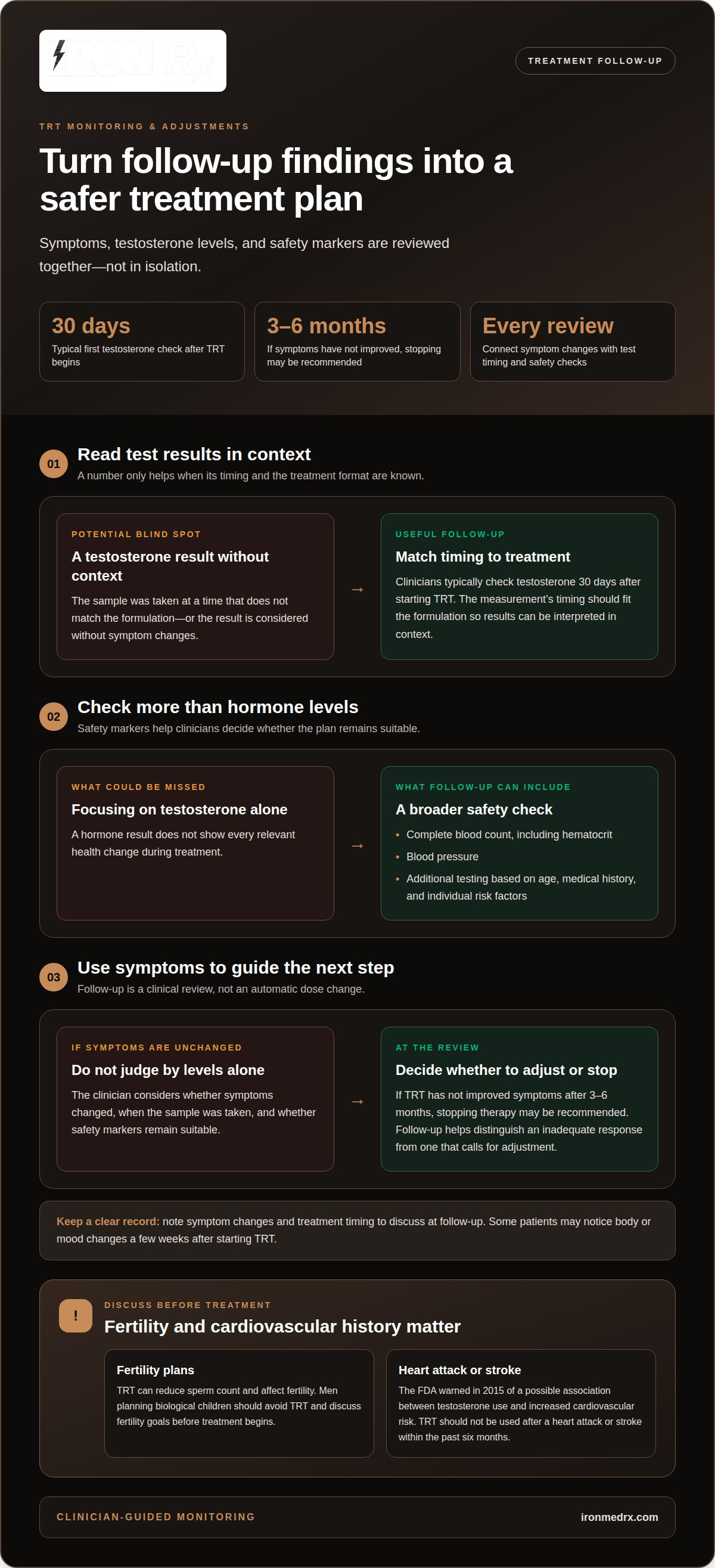
Follow-up testing tracks testosterone levels and health markers during treatment. Clinicians typically check testosterone 30 days after TRT begins. The measurement’s timing should match the treatment formulation, so results can be interpreted in context. A complete blood count, including hematocrit, and blood pressure are also monitored. These results help identify changes that may affect the treatment plan. Additional testing reflects age, medical history, and individual risk factors.
Fertility and Prostate Health
TRT can reduce sperm count and affect fertility. Men planning to have biological children should avoid TRT and discuss fertility goals before treatment begins. Testosterone can also cause the testicles to stop working, making continued medication necessary to maintain normal testosterone levels. Prostate health is part of the medical history and risk review. Follow-up testing may include additional assessments based on age, history, and risk.
TRT carries safety considerations, including fertility effects and possible cardiovascular risk. The FDA warned in 2015 that testosterone use was possibly associated with increased cardiovascular risk; TRT should not be used after a heart attack or stroke within the past six months.
Monitoring and Dose Adjustments
Follow-up combines symptom review with lab results rather than relying on hormone levels alone. The clinician considers whether symptoms have changed, when the sample was taken, and whether safety markers remain suitable. If TRT hasn’t improved symptoms after three to six months, stopping therapy may be recommended. This review helps distinguish an inadequate response from one that calls for a treatment adjustment.
Record symptom changes and treatment timing to discuss at follow-up. Some patients may notice changes in their body or mood a few weeks after starting TRT. Sharing those changes alongside test results gives the clinician a clearer basis for adjusting the plan.
What is testosterone replacement therapy (TRT)?
Testosterone therapy replaces testosterone when evaluation supports a deficiency and treatment is clinically appropriate. Diagnosis relies on symptoms and repeated morning test results, not a baseline number viewed in isolation.
Symptoms and Repeat Morning Tests
Low testosterone may be considered when symptoms align with low levels, but symptoms alone don’t establish the cause. A clinician may order two morning testosterone tests before diagnosis. Comparing both results with the pattern of symptoms helps distinguish a consistent finding from one that needs more context.
Borderline results need to be interpreted alongside medical history and function. The assessment should connect the patient’s experience with repeated measurements rather than treating one lab result as a diagnosis.
Therapy Formulations and Administration
Testosterone therapy comes in different formulations, each with its own schedule. Some intramuscular formulations are administered every one to two weeks, while subcutaneous injections are administered every week. Pellets are implanted under the skin every three to six months.
Skin gels and patches are applied every day as directed. Wet gel can transfer through skin contact, while patch locations are usually changed to help avoid skin reactions. Buccal tablets are applied to the gums twice a day, nasal gel is used in each nostril three times a day, and oral testosterone is taken twice a day.
FDA-Approved and Compounded Options
FDA approval is tied to a defined product and use. TRT is FDA-approved for males whose low testosterone results from a known medical condition, such as hypogonadism. As of 2025, TRT isn’t FDA-approved for males whose testosterone declines naturally with age.
Compounded testosterone and FDA-approved products are not interchangeable terms. The distinction matters when reviewing a formulation, its intended use, and the evidence supporting that use. Clarify which category applies before weighing a treatment plan, and consider whether its purpose matches the documented cause of low testosterone.
Pre-treatment medical history and laboratory evaluation
A structured evaluation connects symptoms, medical history, and test results before treatment begins. This baseline helps determine whether testosterone therapy is clinically appropriate.
The clinician reviews symptoms, past diagnoses, current medicines, and relevant health risks. This history helps identify factors that may affect treatment decisions or provide context for reported changes. Before diagnosing low testosterone, clinicians may order two morning testosterone tests. Repeated results add context to symptoms and help distinguish a persistent finding from an isolated measurement.
Lab testing supports the evaluation but doesn’t replace it. The clinician considers testosterone levels alongside medical history and symptoms, then determines whether further assessment is needed. Age, medical history, and risk can shape additional testing. Bring a clear list of medicines, prior diagnoses, and symptom changes to help build a useful clinical picture.
In the United States, primary-care physicians, internal-medicine physicians, endocrinologists, and urologists can evaluate testosterone deficiency and prescribe TRT when medically appropriate. Testosterone is a controlled prescription medication, so clinicians must be appropriately licensed and authorized to prescribe controlled substances under applicable federal and state law.
Telehealth can support testosterone evaluation and follow-up when the clinician complies with applicable federal and state prescribing rules and performs an appropriate medical evaluation. Unlike nonprescription testosterone boosters, clinician-guided TRT involves assessing symptoms, medical history, and lab results. A booster doesn’t replace that diagnostic process.
Starting and monitoring treatment follows a sequence: review medical history and symptoms, complete the evaluation and testing, then discuss whether treatment is appropriate. Follow-up combines symptom review with testosterone levels and safety monitoring, allowing results to inform adjustments. The specific assessment reflects the patient’s history, risks, and response over time.
TRT formats, including injections, creams, gels, and oral medication
Testosterone replacement therapy comes in several formats, each with its own routine. The choice affects how treatment fits daily life, how consistently it can be used, and how clinicians interpret testosterone levels. Discuss administration, timing, skin contact, and any challenges fitting treatment into work or home routines.
Injectable schedules vary by formulation. Some intramuscular testosterone formulations are administered every one to two weeks; subcutaneous injections are administered every week. Some long-acting formulations are given by injection every 10 weeks in a medical office. Pellets are implanted under the skin every three to six months. These options differ in frequency and delivery, so the intended schedule should be clear before treatment starts.
Topical options include skin gels, patches, and creams. Apply testosterone skin gel every day as directed, and prevent wet gel from transferring to another person through skin-to-skin contact. Patches are also applied every day as directed, with their location usually changed to help avoid skin reactions. Creams are another topical format, and the product directions determine how to apply them. These details matter if you have close contact with others or need a consistent daily routine.
Other formats have distinct administration steps. Buccal testosterone tablets are applied to the gums twice a day, nasal gel is applied into each nostril three times a day, and oral testosterone is taken twice a day. Compare these routines with your schedule and preferences, then discuss how the format may affect follow-up testing and interpretation.
No format guarantees a specific change in energy or symptoms. Clinicians use symptoms and appropriately timed testing to assess response and adjust therapy. Confirm the formulation’s instructions and discuss practical concerns before starting. A manageable routine can support consistent use, while follow-up helps assess whether treatment is working as intended.
Explore personalized care options to take the next step in a medically guided treatment discussion.
IRON RX: Tirzepatide Injections
IRON RX offers Tirzepatide Injections as an option separate from testosterone replacement therapy. Tirzepatide isn’t a testosterone format or a substitute for TRT; the treatments address different health goals. Keep those decisions distinct, and base any testosterone treatment discussion on symptoms, medical history, and clinical evaluation.
If your priorities extend beyond low testosterone, consider whether another care option fits the concern you want to address. IRON RX also offers Copper peptide cream and NAD+ Injection - 1000 mg. Each offering is distinct, so its relevance depends on your personal health goals and clinical context. Avoid treating one therapy as a replacement for another without medical guidance.
Contact IRON RX to discuss your care goals and whether TRT may fit your clinical needs.
Make your next step deliberate
Your health priorities deserve a plan built around the outcomes that matter to you, not a generic idea of vitality. Before your next conversation, consider what changes you want to understand, which concerns you want addressed, and how treatment decisions should fit your broader health goals. These priorities can make a clinical discussion more focused and useful.
Clinician-guided TRT calls for clear expectations and open communication. IRON RX offers TRT, and a conversation can help you explore whether this care aligns with your goals and clinical needs. The next step isn’t about rushing into treatment; it’s about making an informed choice with appropriate oversight.
Contact IRON RX to discuss TRT and take a considered step toward care that reflects your priorities.
Frequently Asked Questions
Can TRT be prescribed through telemedicine?
Yes, telemedicine may be used for testosterone evaluation and follow-up in the United States. The clinician must comply with applicable federal and state prescribing rules and perform an appropriate medical evaluation. A remote appointment doesn’t remove the need for clinical assessment. Prepare a concise symptom history, current medication list, and relevant prior test results so the clinician can review your situation effectively.
Do any online TRT clinics accept insurance?
IRON RX does not offer insurance-covered treatment, so don’t assume coverage is included in its care. Costs depend on the case and are provided after a quote request. Relevant factors include the prescribed treatment and care needs. To plan your budget, focus on the specific treatment and services involved rather than relying on a generalized monthly estimate.
How does TRT work?
TRT supplies testosterone to raise levels when treatment is medically appropriate. It doesn’t remove the underlying cause of low testosterone, and using it can reduce the testicles’ own function. Continued medication may therefore be needed to maintain normal testosterone levels. The key distinction is that treatment manages hormone levels but doesn’t necessarily resolve why they were low in the first place.
How long does it take to notice changes from TRT?
Some people may notice changes in their body or mood a few weeks after starting TRT. Early changes aren’t the same as a complete assessment of treatment response. Briefly record what changes, when you notice it, and whether it persists. This gives follow-up discussions more useful detail than a general impression.
How long does it take to see results from TRT?
Some early changes may appear within a few weeks, but assessing the overall response takes longer than noticing an initial difference. Track the specific concern that led you to consider treatment and whether it changes consistently over time. If symptoms haven’t improved after three to six months, a clinician may recommend stopping therapy. Results and lab findings both inform that assessment.
How much do online TRT clinics cost per month?
There isn’t one monthly cost that applies to every online TRT clinic. At IRON RX, costs depend on the case and are provided after a quote request. Factors include the prescribed treatment and care involved. Ask for the total relevant to your plan and what it covers before using a monthly figure to compare options.
