
Common tirzepatide side effects include nausea, diarrhea, vomiting, constipation, decreased appetite, and upset stomach. They often appear within 24 to 48 hours after a weekly dose, and reports are higher during the first 2 weeks of treatment. Most symptoms are digestive, but some warning signs need prompt medical attention.
It’s reasonable to ask what might happen, when symptoms may appear, and whether they may ease as treatment continues. This guide to tirzepatide side effects covers common reactions, serious allergic symptoms, the thyroid tumor warning, and symptom timing. It also explains which effects to monitor and which signs, such as trouble breathing or persistent stomach pain, need immediate medical attention, so you can respond without guesswork.
Key Takeaways
- Recognize the digestive symptoms most often associated with treatment, and note how they affect your daily routine.
- Learn which signs of a serious allergic reaction call for immediate medical attention.
- Understand how personal or family thyroid cancer history can affect whether tirzepatide is appropriate.
- Track when symptoms begin and change after doses so you can describe the pattern clearly to your healthcare provider.
What are the most common side effects of tirzepatide?
Common reactions include digestive symptoms, especially nausea, diarrhea, vomiting, constipation, and upset stomach. Frequency and severity vary. Track symptoms and discuss effects that persist or disrupt daily life with your healthcare professional.
Common Gastrointestinal Effects
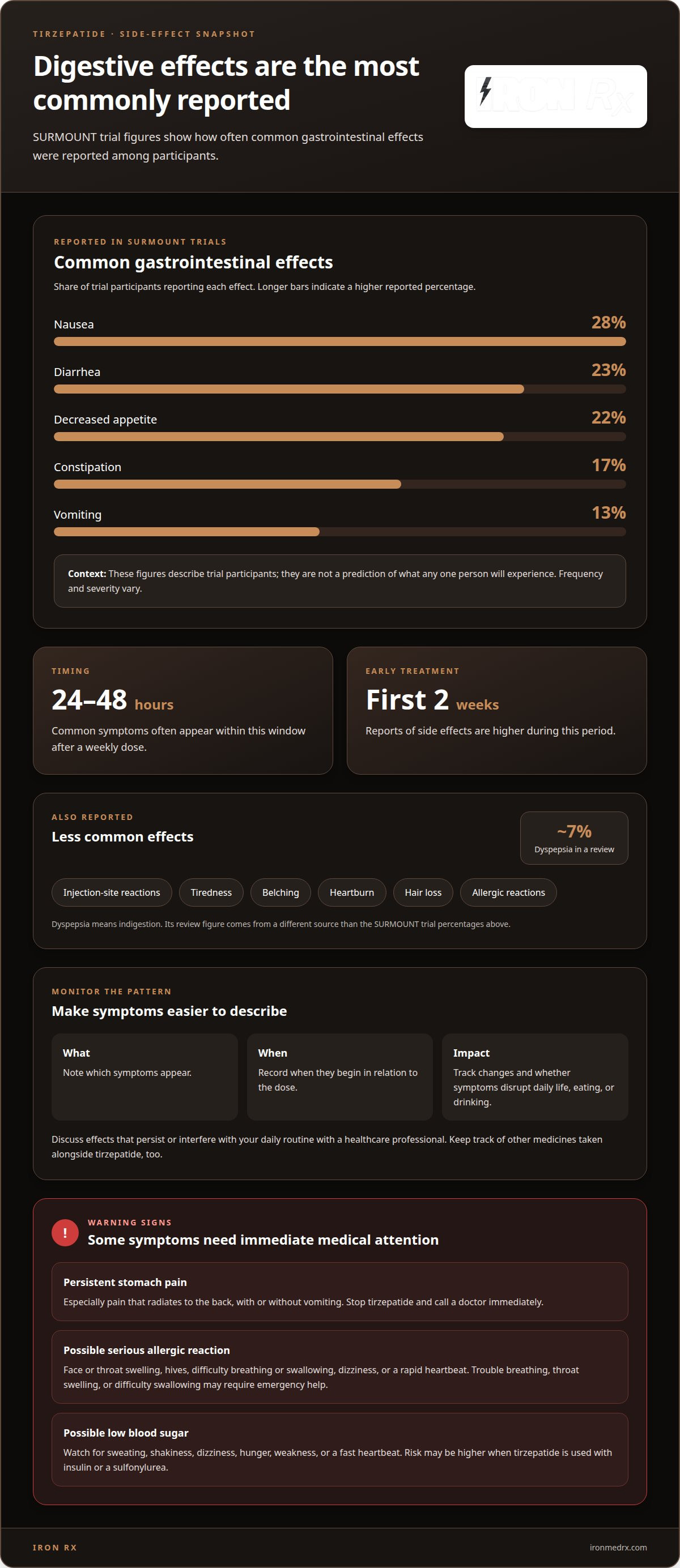
Gastrointestinal effects are digestive symptoms involving the stomach or intestines. In SURMOUNT trials, nausea occurred in 28 percent of patients, diarrhea in 23 percent, and decreased appetite in 22 percent. Constipation affected 17 percent, while vomiting occurred in 13 percent. These figures describe trial participants, not a prediction for each person.
Upset stomach and abdominal discomfort can also occur. Note which symptoms appear, when they begin, and whether they interfere with eating or drinking. Persistent stomach pain, particularly pain that radiates to the back with or without vomiting, requires immediate medical attention. This warning sign needs assessment; symptoms alone don’t establish pancreatitis.
Less Common Effects
Less common effects are reactions reported less often than the leading digestive symptoms. Dyspepsia, or indigestion, affected about 7% of people in a review. Other reported effects include injection-site reactions, tiredness, belching, heartburn, hair loss, and allergic reactions.
Low blood sugar can cause sweating, shakiness, dizziness, hunger, weakness, or a fast heartbeat. The risk may be higher when tirzepatide is used with insulin or a sulfonylurea for diabetes. Track symptoms and any medicines taken alongside tirzepatide, then share the pattern with your healthcare professional.
How do side effects compare between Mounjaro and Zepbound? Both contain tirzepatide, so their common digestive effects overlap, including nausea, diarrhea, vomiting, and constipation. The reason for treatment differs: Mounjaro is used for type 2 diabetes, while Zepbound is used for weight management and obstructive sleep apnea in adults with obesity.
What are the risks during pregnancy or breastfeeding? Zepbound may harm an unborn baby, so tell your healthcare provider if you become pregnant while using it. It may pass into breast milk. Discuss infant feeding with your provider before making treatment decisions.
Serious allergic reactions
A serious allergic reaction can threaten breathing or circulation. After tirzepatide, warning signs include swelling of the face, throat, mouth, or area around the eyes; hives; rash; itching; difficulty swallowing or breathing; dizziness; or a rapid heartbeat. Symptoms may occur together or separately, so take each seriously.
If these signs appear, call a doctor immediately. Trouble breathing, throat swelling, or difficulty swallowing may require emergency help. Don’t wait to see whether symptoms settle, and don’t take another dose before getting medical advice. Tell the responder when you injected tirzepatide, which symptoms began, and whether they’re worsening.
An injection-site reaction is a change in the skin where the medicine was injected. Redness or swelling may occur at the site, while spreading hives or facial swelling can suggest a more serious reaction. Note the injection location and when the change appeared. Contact a healthcare provider if redness or swelling lasts more than two days.
For a mild, localized mark, track its size and duration rather than treating it as a whole-body reaction. A photo can help document changes over time. Avoid injecting into irritated skin, and describe any pain, itching, or swelling during your next clinical discussion.
Your allergy history matters: Zepbound should not be used by someone who has had a serious allergic reaction to tirzepatide or any ingredient in Zepbound. Before treatment decisions, share prior medication allergies and the exact symptoms you experienced. Nausea or stomach pain alone aren’t listed allergy warning signs, but severe or persistent symptoms still need clinical attention.
For routine questions about treatment, tirzepatide injection care can be a starting point. A severe allergic reaction is different: seek immediate medical help rather than relying on routine treatment guidance.
Thyroid tumor warning and contraindications
A thyroid C-cell tumor warning means tirzepatide may increase the risk of thyroid tumors, including a type of thyroid cancer. Patients with a personal or family history of medullary thyroid carcinoma (MTC) or Multiple Endocrine Neoplasia syndrome type 2 (MEN 2) should not use tirzepatide. Tell your clinician about either diagnosis before starting the medication, even if it occurred in a relative.
A contraindication is a medical reason not to use a medication. For tirzepatide, a personal or family history of MTC or MEN 2 is a stated contraindication. Share the exact diagnosis and family history during treatment planning. This warning concerns thyroid C-cell tumors; it doesn’t mean that every thyroid condition automatically carries the same restriction.
Thyroid warning signs may indicate a problem in the neck or throat. Call your doctor immediately for a neck lump or swelling, hoarseness, difficulty swallowing, or shortness of breath. Note when the symptom began and whether it is changing. Report any of these signs promptly, even if no other symptoms appear.
Serious side effects need prompt clinical attention. Warning signs include persistent stomach pain that may radiate to the back, with or without vomiting, and severe allergic symptoms such as face or throat swelling, hives, or trouble breathing. Stop tirzepatide and call a doctor immediately for persistent radiating stomach pain. Breathing difficulty or throat swelling calls for emergency help.
Blood sugar is the glucose circulating in the body, and tirzepatide can contribute to low levels. People with diabetes who use insulin or a sulfonylurea may face greater risk. Watch for sweating, shakiness, dizziness, hunger, weakness, or a fast heartbeat, and report these symptoms to your healthcare professional. A medication review can help identify whether other treatments affect that risk.
When side effects occur and how long they last
Symptom timing can help distinguish a recurring reaction from a new warning sign. Record each weekly dose, when symptoms begin, and how they change before discussing your prescription.
Onset and Duration of Side Effects
Onset is the time between an injection and the first noticeable symptom. Tirzepatide reactions often appear within 24 to 48 hours after a weekly dose, and reports are higher during the first 2 weeks of treatment. Digestive symptoms such as diarrhea, constipation, or stomach discomfort may follow that early pattern, but their duration differs.
An 88-week tirzepatide trial found no new side effects beyond digestive adjustments during the first few months. This finding describes the trial, not a timetable for every patient. Keep a simple log: write the dose date, symptom, start time, and whether it eased or persisted. Contact a healthcare provider if injection-site redness or swelling lasts more than two days.
Dose Changes and Side Effects
Dose titration is the planned, gradual increase of a medication dose. Tirzepatide doses are increased no more often than once every 4 weeks. A change in dose can shift how treatment feels, so compare symptoms before and after each increase. Record nausea, diarrhea, constipation, appetite changes, and any effect on eating or daily activity.
Do tirzepatide side effects change with dose or during dose increases? They can change as the dose rises, and symptoms may become more noticeable during adjustment. A gradual schedule allows time to observe tolerability between increases. Don’t increase sooner than prescribed. Tell your clinician which symptoms returned or worsened and when they began.
Use the overall pattern, not one difficult day, to guide your conversation. Bring your log to a clinical review and note whether symptoms followed each injection, appeared after a dose increase, or persisted between doses. Report severe or persistent symptoms promptly instead of waiting for the next scheduled increase.
IRON RX: Tirzepatide Injections
IRON RX offers Tirzepatide Injections for people considering clinician-guided care. If you’re weighing treatment, or experiencing symptoms that affect your routine, use your symptom timeline and medication history to guide a conversation with the care team. Discuss your treatment goals, previous reactions, and any conditions or medicines that may affect your care.
Clinical guidance can help you understand whether treatment fits your health profile and how to discuss changes in symptoms. It doesn’t replace urgent care: severe allergic symptoms or persistent, intense stomach pain require immediate medical attention.
For a measured next step, contact IRON RX to discuss Tirzepatide Injections and your treatment questions.
Make your next treatment conversation count
Make your next conversation more focused by considering your treatment priorities, the changes you’ve noticed, and the questions you still want answered. A clear record of tirzepatide side effects can help you describe your experience and make the discussion more specific.
Consider more than a single symptom. Think about how treatment fits your health history, daily routine, and longer-term goals. Ask how your care plan will be reviewed, which changes should prompt follow-up, and how to raise concerns between planned check-ins. These questions can turn uncertainty into a practical, collaborative discussion.
IRON RX offers Tirzepatide Injections, alongside other offerings including Copper peptide cream and NAD+ Injection - 1000 mg. For a personalized conversation about your goals and next steps, contact IRON RX with your questions. Take an informed, deliberate approach, and move forward with greater clarity.
Frequently Asked Questions
What side effects can this medication cause?
Tirzepatide can cause digestive symptoms and, less commonly, other reactions. Note whether nausea or diarrhea follows an injection, for example, or whether low blood sugar symptoms occur while you’re also using insulin or a sulfonylurea. Keep a record of medicines, doses, and symptoms to share during a clinical review. Seek prompt medical guidance for severe, persistent, or rapidly worsening symptoms.
What should I avoid while taking tirzepatide?
If they worsen digestive symptoms, limit greasy or spicy foods and acidic items or drinks, such as orange juice, coffee, and alcohol. Smaller, low-fat meals may be easier to tolerate than large meals. Don’t change your prescription dose on your own. If you take birth control pills, ask about backup contraception for four weeks after starting treatment and after each dose increase.
Can tirzepatide cause depression or mood changes?
The Zepbound label lists suicidal behavior and ideation as possible side effects, but that does not establish that every mood change is caused by tirzepatide. Tell your healthcare provider about new or worsening depression, unusual mood shifts, or thoughts of self-harm. If you may harm yourself, seek immediate emergency support. Note when the change began and any recent treatment or medication changes.
Does Mounjaro cause blood clots?
The information covered here doesn’t establish that Mounjaro causes blood clots. Don’t stop or change a prescribed dose solely because of concern about clots. If you have a personal history of clots or take medication to prevent them, discuss your history and full medication list with your prescriber. Seek urgent medical assessment for sudden, severe symptoms that concern you.
Does tirzepatide affect your menstrual cycle?
The information covered here doesn’t establish a direct effect on menstrual cycles. If your period changes after starting treatment, record the timing and discuss it with your healthcare provider, especially if pregnancy is possible. Zepbound may harm an unborn baby, and birth control pills may need backup contraception for four weeks after starting tirzepatide and after each dose increase.
What other information should I know?
For a missed weekly dose, take it within four days; after that, skip it and resume your regular schedule. Don’t take doses within three days of each other. Before surgery or a procedure involving anesthesia or deep sedation, tell the care team you use Zepbound, because it may increase the chance of food entering the lungs. Keep your prescriber informed about planned procedures.


